
Test Your Fire Sprinkler Knowledge!
Sunday
Test Your Home Sprinkler System's I.Q.
Here are five statements about home sprinkler systems. Are they true or false?
1. When one sprinkler goes off, all the sprinklers activate.
False! Only the sprinkler over the fire will activate. The sprinkler heads react to temperatures in each room individually. Thus, fire in a bedroom will activate only the sprinkler in that room.
2. A sprinkler could accidentally go off, causing severe water damage to a home.
False! Records, which have been compiled for well over 50 years, prove the likelihood of this occurring is very remote. Furthermore, home sprinklers will be specifically designed and will be rigorously tested to minimize such accidents.
3. Water damage from a sprinkler system will be more extensive than fire damage.
False! The sprinkler system will severely limit a fire's growth. Therefore, damage from a home sprinkler system will be much less severe than the smoke and fire damage if the fire had gone on unabated or even the water damage caused by water from firefighting hose lines.
4. Home sprinkler systems are expensive.
False! Current estimates suggest that when a home is under construction, a home sprinkler system could cost less than 1% of the total building price.
5. Residential sprinkles are ugly.
False! The traditional, commercial-type sprinklers as well as sprinklers for home use are now being designed to fit in with most any decor.
Need fire sprinklers? Get 4 Quotes from Fire Sprinkler Installers in just minutes - at no cost to you! Only at ConstructionDeal.com
Labels: Fire Safety News, Fire Safety Resources, Fire Sprinkler Options


Sprinklers May Be Required in North Carolina
Monday
The code change would require residential fire sprinklers in new one and two family homes and townhouses that are three stories high or 3,600 feet.
This code change is, in part, a response to the recent fire in Ocean Isle Beach that took the lives of seven college-age students.
But safety has a price. To put a sprinkler system in a large house would cost about $30,000, and fire officials worry with a price tag like that they're bound to hear opposition from developers.
From next week's meeting, the idea will have to go to a public hearing and then to the state legislature. If the proposal does get passed, you won't see sprinklers in new homes until 2009.
Since 2004 in North Carolina 112 people have lost their life in residential fires. In this same time 19,655 residential structures have been damaged or destroyed causing an estimated 210 million dollars in damages."
Of course, that $30,000 price tag is over-inflated to scare away any chance the idea might have to pass through the state legislature. But... anything is possible. What is important is the statistic at the end that talks about the number of lives lost and the total cost of the damage done by fire.
Fire sprinklers would have prevented most, if not all, of those losses.
Labels: Fire Safety News, Fire Sprinkler News
Oregon Real Estate Agents Oppose Fire Sprinklers?
Friday
 I'm always amazed at the people who object to mandatory sprinklers in new homes. In nearly every case, the person or organization who opposes sprinkler systems in homes is someone who's business may be hurt by an additional cost.
In this case, Oregon real estate agents oppose adding sprinklers to new homes. It is my opinion that the only reason there is an objection is due to the added cost on the sale of a new home because it might prevent them from receiving a commission.
It's sad that they would put the lives of the firefighters as well as the adults and children that they are selling these homes to before their own personal gain.
This City Council requirement isn't even for every new home built, only the ones on a certain grade that slows down fire company response time. It's always painfully obvious they have no argument when they make claims like the ones below:
From OregonLive.com: "MEDFORD, Ore. (AP) — House builders and real estate agents want the City Council to overturn a rule that requires fire sprinklers in new single-family homes."
"The Medford Fire Department began imposing new standards last year that require sprinklers in new homes that a fire truck would have to climb a 10 percent grade to reach. The policy includes many areas of Medford because there are several steep street sections around the city."
"Dreyer said there are not enough studies that indicate sprinklers really make a difference. She said the benefits are negligible and the costs are expensive — a sprinkler system for a new 2,400-square-foot house costs $6,000."
"Kuntz said he doesn't object to the city requiring sprinklers in certain homes, but he does object to making a policy change without a public hearings."
By stating there are "not enough studies" that prove how effective, safe, and reliable a fire sprinkler system is, they have no credibility. Even the overstated costs of $6,000 is out there. In new home construction, the costs are much less because the systems are put in while the house is being built. A retrofit certainly costs more but not in a new building project.
Fire Sprinklers put fires out faster, with more efficiency, than waiting for and endangering the lives of firefighters. And with less damage.
It's been proven time and time again.
* photo - life safety fire protection
Labels: Fire Safety, Fire Safety News, Fire Sprinkler Regulations
Fire Sprinklers Could Have Prevented Charleston Tragedy
Wednesday
 On Monday, June 18th, all of the news channels were covering the warehouse furniture store fire down in Charleston, South Carolina, that took the lives of nine brave firefighters.
This was, yet again, another instance where a fire sprinkler system could have protected the people fighting the fire. The sprinklers would have activated as soon as the fire started and cut down or even eliminated the work that needed to be done.
Instead, we're faced with a tragedy.
From EarthTimes.org: "An installed automatic fire sprinkler system would have saved lives in a furniture store and warehouse inferno that occurred in Charleston, SC on June 18. Fueled by combustible stored materials, the uncontrolled fire spread quickly through the unsprinklered building, apparently undermining the structure and leading to a roof collapse. Nine firefighters died battling the blaze. According to the non-profit American Fire Sprinkler Association (AFSA), sprinklers would have controlled the fire, had they been installed in the building."
You can also read an article on CNN about this tragic event. There is also one up on Bloomberg, detailing the account.
If your business is in need of fire sprinklers, you can find a local company to inspect the site and let you know what is required. Post your request for free and we'll match you with a professional who can help prevent another tragedy.
(Photo courtesy of CNN.com)
Labels: Fire Dangers, Fire Safety News
Fire Safety: Mattress Law More Harm Than Good?
Friday
 Many people consider laws that require fire sprinklers in all residential buildings think this sort of legislation is unnecessary. When they face stiff resistance, they're forced to enact other laws that seem good on paper, but don't consider the repercussions. For example, in this article from NewsReview.com (below) there is a federal law in place that focuses on the combustibility of the mattress. Each year, many people die from fires in bed that are generally caused by cigarettes and candles.
Instead of requiring that homes be fitted with sprinklers, the federal government has chosen to introduce a law that will require that the mattress industry make their products nearly inflammable. The problem is that the legislation will force many mattress manufacturers to introduce dangerous or even deadly chemicals in their product:
"Richard Lash has been preparing to meet the blowtorch test. When July 1 comes around, he'll be ready.
Lash is the co-owner of Square Deal Mattress Factory, Chico's vaunted micro-manufacturer of quality mattresses. For some time, he has known that a new federal law governing mattresses' combustibility will go into effect next month.
The law will require all mattresses to withstand an open flame from two blowtorches for two minutes without bursting into flame and to stay below a certain temperature for 30 minutes.
There have been mandatory fire regulations regarding cigarettes and mattresses for more than 30 years ... but blowtorches? Now, that's a tall order.
The good news is the law is expected to save about 270 lives a year. The bad news is it will force millions of Americans to sleep on beds that could be covered with toxic flame-retardant chemicals. That includes babies sleeping on crib mattresses.
Many larger mattress manufacturers are coating their materials with chemicals such as formaldehyde, boric acid, antimony and fiberglass in order to meet the new codes.
'I don't think any of them are particularly good for you,' said Dr. Gary Incaudo, a Chico allergist. 'I just worry about mattresses because it's right up against your face for a really long time.'"
You can read the rest of the article here. It's obvious that a complete fire sprinkler system would protect not only those sleeping on their beds at night but everyone in every other part of the house as well -- without harsh and nasty chemicals. It's like putting a Band-Aid on a very harsh and serious wound.
The law goes into effect on July 1st of 2007.
* photo - CPSC
"Blaze Leaves Doormaker with Minor Damage"
Thursday
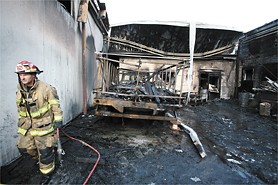 Here's a real world example of how a business can have a fire break out and, because of sprinklers, be back in business the same week.
From the Forest Grove News-Times: "By all accounts, employees of Woodfold, Inc. are lucky to be making doors this week - and not shoveling piles of smoldering ash.
A fire broke out around 3:30 a.m. Monday in a partially covered area that the Forest Grove manufacturer used to store a dump truck, which is believed to have been the source of the first spark. Had the blaze spread it could have reached a couple hundred thousand board-feet of wood. But fire walls and a sprinkler system contained the flames before they could destroy some of the company's more crucial operations, and fire agencies extinguished the flames within two hours. No one was injured. Damages are estimated at $150,000-plus.
If that building had not had a sprinkling system, it's likely we would all still be there," David Nemeyer, fire inspector for the Forest Grove Fire Department, said nearly four hours after the fire was put out at 5:30 a.m. 'The fire sprinklers did their job today. It really showed how important they are.'
The stakes were huge for Forest Grove and the surrounding area. Woodfold is one of the city’s largest employers, with 125 employees, who are also shareholders in the employee-owned company.
Woodfold builds accordion doors, among other things, and does upward of $17 million in sales annually."
Had the fire been worse, the timing couldn't have made a blacker mark on Woodfold's calendar: 2007 is the year of its 50th anniversary. Instead, 2007 will also be remembered as a year when Woodfold dodged a bullet.
Just hours after the fire, 75 percent of Woodfold's operations were running, said Vice President John Doran. He predicted that it could be operating fully by the end of the week, when electricians will have had time to reroute some major electrical work that was damaged in the blaze.
'I would guess that within a week, you’ll hardly be able to tell anything happened,' he said, commending the local fire agencies.
The company executive echoed firefighters' observation that the sprinklers and the firewalls did their job.
'The system worked,' he said."
Labels: Fire Dangers, Fire Safety News
NAHB Against Fire Sprinkler Safety
Wednesday
On their site, they have a NAHB Disaster Resources section. And in this section, there is a Residential Fire Sprinkler Action Kit - which sounds like something helpful for contractors, builders, and remodeling companies to help ensure the lives of the people they work for. But, instead, it says this:
The Residential Fire Sprinkler Action Kit provides you with the information you need to know in opposing mandatory fire sprinkler requirements for one- and two-family dwellings in the IRC.However, this section is restricted to members only, as they may have something to hide. The NAHB claims that smoke alarms are enough in a residential setting and that mandatory sprinklers would add too much to the cost of a new house.
The International Code Council final action hearings are scheduled for May 21-26 of this year in
Despite the outcome, it is very sad that in all the statistics that the NAHB lists on why smoke alarms are enough - - they fail to point out that many, many people are still injured and die and lose most of their property because fire sprinklers were not installed to protect them.
Keep an eye on the debate and vote. And we'll make sure we report the outcome here. Let's hope that we can afford to make America safe (and protect all of our firefighters who are forced to go into these burning buildings that have no sprinklers...)
Despite the bloated NAHB costs per square foot: fire sprinklers save money and save lives - sprinklers cause less damage, use less water, reduce insurance costs, protect homeowners' lives, protect fire fighters' lives, work effectively, and are relatively inexpensive to install in a newly constructed home. The facts do not lie.
Greed, for lack of a better word, kills...
Hawaii Requesting Tax Breaks for Sprinklers!
According to the article, a law was passed in '75 that required all new high-rise buildings to install sprinkler systems - the loophole was that existing buildings were not required to retrofit.
Here's the rest of the article:
"Fire that gutted a 25th-floor condominium near Kapiolani Boulevard and injured six people is the latest reminder of why aging residential buildings need sprinkler systems. The City Council has seemed willing to approve such a requirement if state tax breaks are available, but the Legislature has dropped the ball. State lawmakers should approve such a deduction before the next blaze.
Following the Las Vegas MGM Grand Hotel fire, the City Council in 1983 mandated retrofitting of older hotels. The Council required sprinklers in the 35 older commercial buildings in 2001, feeling the heat from a fire at the Interstate Building on King Street that injured 11 firefighters and caused extensive damage.
Following the death of an elderly man in a Waikiki high-rise fire two years ago, Mayor Mufi Hannemann called on the Council to pass an ordinance requiring sprinkler systems in all high-rises.
The Council has resisted because of the burden on condo owners; sprinklers could cost between $4,500 and $13,000 per unit, according to Lloyd Rogers, a Honolulu fire battalion chief who heads the Fire Prevention Bureau. From 2000 through 2004, he said, 21 fires in high-rise buildings with sprinkler systems caused $175,410 in damage, while 46 fires in unequipped high-rises caused $2.7 million in damage.
A city advisory group headed by Rogers concluded two years ago that financial incentives are needed to persuade the 12,600 owners of older condos to install sprinklers. Legislation to provide tax breaks for such installations has died in past sessions and has languished this year in the House after gaining Senate approval."
As far as tax incentives, Construction Deal.com thinks it's a great idea. Firefighters, insurance companies, and other experts everywhere understand that a fire sprinkler or fire suppression system saves lives. And saves property. Anything that helps get these sprinkler systems installed is a great idea - whether it is laws or tax breaks... it can save lives.
If you're interested in retrofitting your high-rise building, we've recently added a commercial fire sprinkler installation category! Post your request with us - for free! You'll save time as sprinkler contractors will call you.
Mayor Urges Fire Safety in wake of Bronx Tragedy
Tuesday
In his weekly radio address on 1010 WINS, the mayor stressed the importance of preparing for an emergency.
'If a fire does occur, get out of the house as quickly as possible, and you can help contain it and possibly save lives by closing the doors behind you. Then, use the nearest phone to call 911,' he said. 'Every family should develop and discuss a fire escape plan and practice it. That's especially important if you have children. It only takes a few minutes, but it could save lives.'
Investigators say the Highbridge fire started with an overloaded electrical cord leading to a space heater. The building had smoke detectors, but there were no batteries in them.
Investigators also say residents did not call 911 immediately, delaying the response. "
This should be a lesson to us all. Check your batteries, replace your batteries or add more smoke detectors if you only have one or two. If sprinklers are out of the question in your project, detectors and fire extinguishers could save your life and lives of your family.
Labels: Fire Safety, Fire Safety News
WNBC: "Top 10 Tips on Fire Safety"
Friday
 From WNBC TV in New York - 10 fire safety tips:
"Install and Maintain Smoke Detectors
Smoke detectors warn you of fire in time to let you escape. Install them on each level of your home and outside of each sleeping area. Follow the manufacturer's directions, and test once a week. Replace batteries twice a year, or when the detector chirps to signal that the battery is dead. Don't ever take the battery out for other uses!
Plan and Practice Your escape
If fire breaks out in your home, you must get out fast. With your family, plan two ways out of every room. Fire escape routes must not include elevators, which might take you right to the fire! Choose a meeting place outside where everyone should gather. Once you are out, stay out! Have the whole family practice the escape plan at least twice a year.
Space Heaters Need space
Keep portable space heaters at least 3 feet (1 meter) from paper, curtains, furniture, clothing, bedding, or anything else that can burn. Never leave heaters on when you leave home or go to bed, and keep children and pets well away from them.
Be Careful Cooking
Keep cooking areas clear of combustibles, and don't leave cooking unattended. Keep your pot's handles turned inward so children won't knock or pull them over the edge of the stove. If grease catches fire, carefully slide a lid over the pan to smother the flames, then turn off the burner.
A Match is a Tool for Adults
In the hands of a child, matches or lighters are extremely dangerous. Store them up high where kids can't reach them, preferably in a locked cabinet. And teach your children from the start that matches and lighters and lighters are tools for adults, not toys for kids. If children find matches, they should tell an adult immediately.
Use Electricity Safely
If an appliance smokes or begins to smell unusual, unplug it immediately and have it repaired. Check all your electrical cords, and replace any that are cracked or frayed. If you use extension cords, replace any that are cracked or frayed; and don't overload them or run them under rugs. Remember that fuses and circuit breakers protect you from fire: don't tamper with the fuse box or use fuses of an improper size.
Cool a Burn
If someone gets burned, immediately place the wound in cool water for 10 to 15 minutes to ease the pain. Do not use butter on a burn, as this could prolong the heat and further damage the skin. If burn blisters or chars, see a doctor immediately.
STOP, DROP, AND ROLL
Everyone should know this rule: if your clothes catch fire, don't run! Stop where you are, drop to the ground, and roll over and over to smother the flames. Cover your face with your hands to protect your face and lungs.
Crawl Low Under Smoke
If you encounter smoke using your primary exit, use your alternate route instead. If you must exit through smoke, clean air will be several inches off the floor. Get down on your hands and knees, and crawl to the nearest safe exit.
Practice Candle Safety
The popularity of candles as home decorations in recent years, has resulted in an increase of candle related fires. Some safe tips include: Never leave a lit candle unattended in any room of the house; Never leave candles burning when you go to bed; and never use candles near combustible materials such as curtains, drapes, bedding and cabinets. Visit our candle safety page for more information."
Labels: Fire Safety, Fire Safety News
Fire Safety Stressed As Fatalities Increase
Wednesday
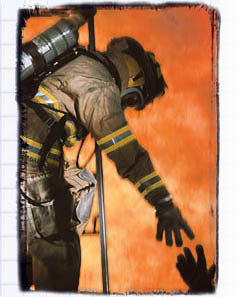 According to the New York Garden City News online: "A substantial jump in the number of house fires with fatalities nationwide this month has fire chiefs across the country reaching out to the public to emphasize the importance of fire safety.
"We have lost too many people in home fires in the last two weeks," said President Chief Jim Harmes, president of the International Association of Fire Chiefs. "Six people were recently killed in a house fire in Louisiana, two in house fires in Tennessee and one in my own community in Grand Blanc, Michigan. We have got to do something."
"People now have more protection available for their homes than ever before and yet they are losing their lives because they are not taking this protection seriously," he continued.
A quick check of media reports for the first 16 days of February reveals 59 house-fire fatalities across the country. Thirty fatalities were single or double fatalities, and 29 deaths resulted from just six house fires and were counted as multiple fatalities (three or more individuals).
"These are not just numbers; these are personal tragedies that each of us as a fire chief feels every time a life is lost," said Harmes.
Labels: Fire Safety News, Fire Statistics
Fire Safety Prevention
Tuesday
 From the Current Online.com "What do you need to know about fire prevention? And more importantly, do you know what to do should you need to get out?
Getting out takes practice, according to Tom Harwin, fire chief for the Normandy Fire Protection District. "No matter what your plan, when smoke fills the hallway, you become disoriented," said Harwin. "Practice in perfect conditions."
While in perfect conditions without a fire, know your route, and count the doors from where you are to the hallway or exit. Smoke is the greatest risk in a fire situation. Heat and flames are not normally the cause of death. Fires give off several gases, including carbon monoxide and hydrogen sulfide.
"Smoke is hazardous, for inhalation, and because it blinds you," said Harwin. The smoke can disorient you, then the carbon monoxide can impact your body's systems, making an escape more difficult to achieve.
Harwin said the best prevention is to protect yourself. "Smoke detectors are the best protection we have. And they do work as long as they are maintained," he said. In that maintenance, the batteries should be checked and the detector regularly tested.
Fires can occur at any time of day, but according to Harwin, nights are usually worse than days. People are asleep, so there are less people around when the fire is still at the incipient stage and able to be seen from first signals. There is also the trouble of rousing individuals to get out.
Early detection products, such as smoke alarms, can help act as a witness to a developing fire when people are not awake or around to do so.
Aside from smoke detectors, sprinkler systems are some of the best protection against fire available. According to Harwin, 95-97% of fires that are sprinkled are contained to that area. He said that most fires can be contained with no more than three sprinkler heads.
If a fire is between two, two will activate, at most three. The sprinklers keep the developing fire in check until the fire department can arrive.
Harwin said that the majority of fires happen in the kitchen, which is primarily why there are not kitchenettes in most dorms.
People will set something on to cook late at night, sit on the couch while the food is cooking, then doze off.
"Usually the food is just smoking, but people have perished in kitchen fires," he said.
Of all kitchen fires, Harwin said, "Grease fires are terrible." If using an open skillet instead of a contained heating coil, such as one found in a fry daddy, the oil can splash over the side and ignite. The entire pan of oil then combusts into flame and can easily catch the cabinetry nearby.
Labels: Fire Safety, Fire Safety News
Downtown Austin Adding Fire Safety
Friday
Fire safety news from the Post-Bulletin.com: "Austin's effort to revitalize downtown is confronted with several long-range problems, such as parking and access to upper levels of buildings, according to city officials.
A third issue relates to finding ways to help older, downtown structures meet today's building codes, particularly by installing fire sprinkler systems, and Austin City Council is supporting a proposed program to help in that endeavor.
Council members voted 6-1 at a work session Tuesday to recommend Port Authority designate an initial $200,000 in funds for low- or no-interest loans to owners of older buildings downtown to install sprinkler systems. The proposal is for buildings 80 years or older.
Several downtown buildings date to the 1880s and 1890s.
The 10-year loans also could be made to upgrade electrical systems in the older buildings, which would decrease the risk of fire, City Administrator Jim Hurm said.
The program could help revitalize downtown and save lives and structures, Hurm said. The fire department is concerned with an entire downtown block burning down, as the buildings are connected, he said.
In a memorandum to the council, Hurm stated the loan program's first priority should be the older buildings that are connected.
The nonprofit Austin Main Street Project, which aims to revive downtown, would administer the funds. Money for the program would come out of Port Authority's budget, which would be in addition to the roughly $760,000 it already has for downtown revitalization, officials said.
Council member Dick Pacholl voted against supporting the program, saying he wouldn't get that kind of loan offer as a homeowner. It's the building owner's problem to handle, he said.
His son and fellow council member Scott Pacholl disagreed, saying the program makes sense considering the money the city already has invested in reviving downtown. If buildings burn down, the city's investment is wasted, he said.
Several insurance agents, according to Hurm, have told him an older building's insurance rate could be reduced by 20 percent to 50 percent with the installation of a sprinkler system, depending on various factors. An electrical-system upgrade could lead to another 7 percent to 10 percent decrease in insurance for an older building."
Labels: Fire Safety, Fire Safety News, Fire Sprinkler Regulations





