
Success for Fire Sprinklers in South Carolina!
Thursday
"Lawmakers showed overwhelming support for the sprinkler incentives, the one legislative action to come from last year's Sofa Super Store fire that killed nine Charleston firefighters."
"'I was very grateful,' said Rep. Leon Stavrinakis, D-Charleston. 'I couldn't imagine leaving here without having tried to address fire safety after what happened.'"
Labels: Fire Sprinkler Regulations, Tax Incentives


Overriding a Veto on Fire Sprinklers in South Carolina?
Friday
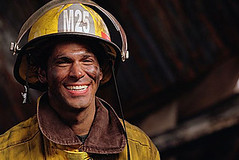 From the South Carolina site, Greenville Online.com, comes news of fire sprinkler legislation. This state has been affected by many fires recently with a great loss of life and property due to fire. And each was a case where fire sprinklers could and would have saved a lot of people and property. It sounds like good news, if lawmakers decide to override the governor's veto of the bill.
Here's the story: "COLUMBIA -- Some legislators predicted Thursday that lawmakers will override Gov. Mark Sanford’s veto of a bill to grant incentives to those who install fire sprinkler systems."
"Sanford vetoed the bill when he considered a batch of about 60 bills legislators passed recently. Among those he signed into law was a bill that would allow displays in public buildings of the Ten Commandments and the Lord's Prayer as historical documents."
"Sanford vetoed the sprinkler bill because he said the tax credits offered were large enough that they amounted to a subsidy. The bill offers property owners installing sprinklers a local property tax credit equal to 25 of the cost of the fire sprinkler system and an additional 25 percent tax credit from the state."
"The state tax credit would depend on a local government approving local incentives."
"'The tax consequence of this bill is smaller than the one originally proposed, and in that regard, we give the General Assembly credit,' Sanford wrote in a letter to House Speaker Bobby Harrell."
"'However, it still creates a taxpayer-funded subsidy of 50 percent of the total cost of installation incurred by property owners who install fire sprinklers. It has been our position that taxpayers should represent the minority of investment in additions to a privately held concern like a hotel, restaurant or warehouse.'"
"Sanford also wrote that the bill was 'constitutionally suspect' because not all property owners in the state would be treated the same, with some getting incentives based on what their local governments did and others unable to take advantage of the law."
"'Some in legal circles have argued it makes no sense to make a distinction as to who is entitled to a tax credit based on the actions of their local government,' Sanford wrote."
"Sen. Danny Verdin of Laurens, who worked on the legislation and helped craft the compromise, said he believes lawmakers will override Sanford's veto based on their votes to pass the bill initially."
"'It is a good piece of legislation that will save lives, improve property value and contribute to the overall quality of life,' he said."
"Rep. Harry Cato of Travelers Rest, chairman of the House Labor, Commerce and Industry Committee, said he would be 'shocked' if the House didn't override the veto."
You can read the rest of the news story at Greenville Online.com.
If you or someone you know is in need of fire sprinkler systems in their home or commercial building, you can always contact ConstructionDeal.com. We'll match you with fire sprinkler installers who can make sure your home or business is protected from deadly fires.
It is an absolutely free service to use. Simply post your request, give us your contact details, and we'll do the rest. It's that easy.
Labels: Fire Sprinkler Regulations
Fire Sprinkler Advocate of 2007
Thursday
"I am honored and humbled to receive this award," said Langevin. "It certainly never crossed my mind that I would receive any recognition for this effort. I simply saw a need in the wake of a tragic event in my home state and sought to fix it the best way I knew how – with legislation."
Rep. Langevin, chairman of the Homeland Security Subcommittee on Emerging Threats, Cybersecurity and Science, and Technology, is a member of the Congressional Fire Services Caucus, the largest caucus in Congress. Sixteen industry groups including the American Fire Sprinkler Association and all 45 members of the Congressional Fire Services Institute National Advisory Committee, which includes all major National Fire Service organizations, support the bill.
The Fire Sprinkler Advocate Award was presented by AFSA Vice Chairman of the Board and Chairman of the Legislative Committee Larry Thibodeau and AFSA President Steve Muncy.
Muncy noted that Langevin is serious about the Fire Sprinkler Incentive Act.
"The Station nightclub fire [that left 100 dead and more than 200 people injured in West Warwick, R.I. on Feb. 20, 2003] heightened the awareness of fire issues for many people, and Rep. Langevin immediately understood the role that fire sprinklers could have played in saving lives," Muncy said. "He is deeply committed to seeing this legislation passed and is working hard to achieve that goal."
The Fire Sprinkler Incentive Act of 2007 amends the Internal Revenue Code to provide for accelerated depreciation of five years for automatic fire sprinkler systems installed in existing occupancies, as opposed to the current 27.5- or 39-year period for installations in residential, rental, and non-residential real property. The bi-partisan legislation aims to amend the Internal Revenue Code to provide an incentive to business owners for retrofitting existing buildings with sprinklers. Specifically, this legislation will reduce the tax depreciation time for retrofitting sprinklers in nonresidential real property from 39 years to only five. H.R. 1742 is companion legislation to Senate Bill 582.
The 43-year-old Congressman commented, "I am hopeful that this recognition will help to raise an awareness of the work that still needs to be done. This legislation needs to pass if we, as a nation, are going to try to save more lives."
Langevin urged everyone to write their representative asking for their support of this legislation and thanking them if they have already pledged their support of the legislation.
Labels: Fire Sprinkler Regulations
A Residential Fire Sprinkler Law Has Been Reversed
Friday
According to the Northern Illinois Fire Sprinkler Advisory Board (NIFSAB) the village's board members who voted to reverse the ordinance did not provide facts supporting the removal of the ordinance.
Tom Lia, executive director of NIFSAB, says there are currently 50 Chicago area municipalities/fire districts that require fire sprinklers. Six have passed their ordinances in the last year.
"I feel for Huntley Fire Chief Jim Saletta," Lia said, "He worked hard to pass the ordinance two years ago and to defend it last night. It's frustrating when elected officials don't support their own safety leaders."
Lia said the reversal is an embarrassment for Huntley. In addition to local fire officials watching the decision, many national safety organizations will be disappointed to hear about the ordinance reversal. Those organizations include the National Fire Protection Association, Home Safety Council and the U.S. Fire Administration.
Labels: Fire Sprinkler Regulations
Oregon Real Estate Agents Oppose Fire Sprinklers?
 I'm always amazed at the people who object to mandatory sprinklers in new homes. In nearly every case, the person or organization who opposes sprinkler systems in homes is someone who's business may be hurt by an additional cost.
In this case, Oregon real estate agents oppose adding sprinklers to new homes. It is my opinion that the only reason there is an objection is due to the added cost on the sale of a new home because it might prevent them from receiving a commission.
It's sad that they would put the lives of the firefighters as well as the adults and children that they are selling these homes to before their own personal gain.
This City Council requirement isn't even for every new home built, only the ones on a certain grade that slows down fire company response time. It's always painfully obvious they have no argument when they make claims like the ones below:
From OregonLive.com: "MEDFORD, Ore. (AP) — House builders and real estate agents want the City Council to overturn a rule that requires fire sprinklers in new single-family homes."
"The Medford Fire Department began imposing new standards last year that require sprinklers in new homes that a fire truck would have to climb a 10 percent grade to reach. The policy includes many areas of Medford because there are several steep street sections around the city."
"Dreyer said there are not enough studies that indicate sprinklers really make a difference. She said the benefits are negligible and the costs are expensive — a sprinkler system for a new 2,400-square-foot house costs $6,000."
"Kuntz said he doesn't object to the city requiring sprinklers in certain homes, but he does object to making a policy change without a public hearings."
By stating there are "not enough studies" that prove how effective, safe, and reliable a fire sprinkler system is, they have no credibility. Even the overstated costs of $6,000 is out there. In new home construction, the costs are much less because the systems are put in while the house is being built. A retrofit certainly costs more but not in a new building project.
Fire Sprinklers put fires out faster, with more efficiency, than waiting for and endangering the lives of firefighters. And with less damage.
It's been proven time and time again.
* photo - life safety fire protection
Labels: Fire Safety, Fire Safety News, Fire Sprinkler Regulations
Fire Safety: Mattress Law More Harm Than Good?
 Many people consider laws that require fire sprinklers in all residential buildings think this sort of legislation is unnecessary. When they face stiff resistance, they're forced to enact other laws that seem good on paper, but don't consider the repercussions. For example, in this article from NewsReview.com (below) there is a federal law in place that focuses on the combustibility of the mattress. Each year, many people die from fires in bed that are generally caused by cigarettes and candles.
Instead of requiring that homes be fitted with sprinklers, the federal government has chosen to introduce a law that will require that the mattress industry make their products nearly inflammable. The problem is that the legislation will force many mattress manufacturers to introduce dangerous or even deadly chemicals in their product:
"Richard Lash has been preparing to meet the blowtorch test. When July 1 comes around, he'll be ready.
Lash is the co-owner of Square Deal Mattress Factory, Chico's vaunted micro-manufacturer of quality mattresses. For some time, he has known that a new federal law governing mattresses' combustibility will go into effect next month.
The law will require all mattresses to withstand an open flame from two blowtorches for two minutes without bursting into flame and to stay below a certain temperature for 30 minutes.
There have been mandatory fire regulations regarding cigarettes and mattresses for more than 30 years ... but blowtorches? Now, that's a tall order.
The good news is the law is expected to save about 270 lives a year. The bad news is it will force millions of Americans to sleep on beds that could be covered with toxic flame-retardant chemicals. That includes babies sleeping on crib mattresses.
Many larger mattress manufacturers are coating their materials with chemicals such as formaldehyde, boric acid, antimony and fiberglass in order to meet the new codes.
'I don't think any of them are particularly good for you,' said Dr. Gary Incaudo, a Chico allergist. 'I just worry about mattresses because it's right up against your face for a really long time.'"
You can read the rest of the article here. It's obvious that a complete fire sprinkler system would protect not only those sleeping on their beds at night but everyone in every other part of the house as well -- without harsh and nasty chemicals. It's like putting a Band-Aid on a very harsh and serious wound.
The law goes into effect on July 1st of 2007.
* photo - CPSC
Residential Fire Sprinklers Receive Unprecedented Support at ICC Hearing
Thursday
'Our level of support in Rochester was nothing short of astounding. I've been a proponent of residential sprinklers for many years, and to see what the IRC Fire Sprinkler Coalition has accomplished in less than six months to rally this cause gives me great confidence in the future of residential sprinklers,' said Ronny J. Coleman, former California state fire marshal. 'It's now clear to me that the question is no longer if we'll have a national requirement for residential sprinklers, but when, and I think it will happen soon.'
With the nation's model building codes now requiring fire sprinkler systems to protect all multi-family residential occupancies, home fire sprinklers represent the final piece missing from the nation's residential fire safety package.
'Eight out of ten fire deaths in America occur at home, where people feel safest,' said Meri-K Appy, President of the Home Safety Council. 'Our path forward is clear. We must continue to educate code officials, home builders and others about the importance of residential fire sprinklers.'
Safety experts know that while smoke alarms are essential, only fire sprinklers have the ability to automatically put water on the fire, controlling or even extinguishing it completely. This is especially important in protecting children, older people and individuals who need extra time or assistance to escape from a burning home. The technology, already protecting families in hundreds of thousands of homes across the country, is proven to save lives and protect property.
Building on momentum leading up to the Rochester hearing, the IRC Fire Sprinkler Coalition will continue to advance the cause of life-safety. In pursuit of its mission to convey facts and dispel myths about residential sprinklers, copies of an international Web cast on this topic aired by the Coalition on May 3rd and viewed by hundreds of download sites are now available for free on DVD."
Labels: Fire Sprinkler Regulations, Residential Fire Sprinklers
NAHB Against Fire Sprinkler Safety
Wednesday
On their site, they have a NAHB Disaster Resources section. And in this section, there is a Residential Fire Sprinkler Action Kit - which sounds like something helpful for contractors, builders, and remodeling companies to help ensure the lives of the people they work for. But, instead, it says this:
The Residential Fire Sprinkler Action Kit provides you with the information you need to know in opposing mandatory fire sprinkler requirements for one- and two-family dwellings in the IRC.However, this section is restricted to members only, as they may have something to hide. The NAHB claims that smoke alarms are enough in a residential setting and that mandatory sprinklers would add too much to the cost of a new house.
The International Code Council final action hearings are scheduled for May 21-26 of this year in
Despite the outcome, it is very sad that in all the statistics that the NAHB lists on why smoke alarms are enough - - they fail to point out that many, many people are still injured and die and lose most of their property because fire sprinklers were not installed to protect them.
Keep an eye on the debate and vote. And we'll make sure we report the outcome here. Let's hope that we can afford to make America safe (and protect all of our firefighters who are forced to go into these burning buildings that have no sprinklers...)
Despite the bloated NAHB costs per square foot: fire sprinklers save money and save lives - sprinklers cause less damage, use less water, reduce insurance costs, protect homeowners' lives, protect fire fighters' lives, work effectively, and are relatively inexpensive to install in a newly constructed home. The facts do not lie.
Greed, for lack of a better word, kills...
Hawaii Requesting Tax Breaks for Sprinklers!
According to the article, a law was passed in '75 that required all new high-rise buildings to install sprinkler systems - the loophole was that existing buildings were not required to retrofit.
Here's the rest of the article:
"Fire that gutted a 25th-floor condominium near Kapiolani Boulevard and injured six people is the latest reminder of why aging residential buildings need sprinkler systems. The City Council has seemed willing to approve such a requirement if state tax breaks are available, but the Legislature has dropped the ball. State lawmakers should approve such a deduction before the next blaze.
Following the Las Vegas MGM Grand Hotel fire, the City Council in 1983 mandated retrofitting of older hotels. The Council required sprinklers in the 35 older commercial buildings in 2001, feeling the heat from a fire at the Interstate Building on King Street that injured 11 firefighters and caused extensive damage.
Following the death of an elderly man in a Waikiki high-rise fire two years ago, Mayor Mufi Hannemann called on the Council to pass an ordinance requiring sprinkler systems in all high-rises.
The Council has resisted because of the burden on condo owners; sprinklers could cost between $4,500 and $13,000 per unit, according to Lloyd Rogers, a Honolulu fire battalion chief who heads the Fire Prevention Bureau. From 2000 through 2004, he said, 21 fires in high-rise buildings with sprinkler systems caused $175,410 in damage, while 46 fires in unequipped high-rises caused $2.7 million in damage.
A city advisory group headed by Rogers concluded two years ago that financial incentives are needed to persuade the 12,600 owners of older condos to install sprinklers. Legislation to provide tax breaks for such installations has died in past sessions and has languished this year in the House after gaining Senate approval."
As far as tax incentives, Construction Deal.com thinks it's a great idea. Firefighters, insurance companies, and other experts everywhere understand that a fire sprinkler or fire suppression system saves lives. And saves property. Anything that helps get these sprinkler systems installed is a great idea - whether it is laws or tax breaks... it can save lives.
If you're interested in retrofitting your high-rise building, we've recently added a commercial fire sprinkler installation category! Post your request with us - for free! You'll save time as sprinkler contractors will call you.
Downtown Austin Adding Fire Safety
Friday
Fire safety news from the Post-Bulletin.com: "Austin's effort to revitalize downtown is confronted with several long-range problems, such as parking and access to upper levels of buildings, according to city officials.
A third issue relates to finding ways to help older, downtown structures meet today's building codes, particularly by installing fire sprinkler systems, and Austin City Council is supporting a proposed program to help in that endeavor.
Council members voted 6-1 at a work session Tuesday to recommend Port Authority designate an initial $200,000 in funds for low- or no-interest loans to owners of older buildings downtown to install sprinkler systems. The proposal is for buildings 80 years or older.
Several downtown buildings date to the 1880s and 1890s.
The 10-year loans also could be made to upgrade electrical systems in the older buildings, which would decrease the risk of fire, City Administrator Jim Hurm said.
The program could help revitalize downtown and save lives and structures, Hurm said. The fire department is concerned with an entire downtown block burning down, as the buildings are connected, he said.
In a memorandum to the council, Hurm stated the loan program's first priority should be the older buildings that are connected.
The nonprofit Austin Main Street Project, which aims to revive downtown, would administer the funds. Money for the program would come out of Port Authority's budget, which would be in addition to the roughly $760,000 it already has for downtown revitalization, officials said.
Council member Dick Pacholl voted against supporting the program, saying he wouldn't get that kind of loan offer as a homeowner. It's the building owner's problem to handle, he said.
His son and fellow council member Scott Pacholl disagreed, saying the program makes sense considering the money the city already has invested in reviving downtown. If buildings burn down, the city's investment is wasted, he said.
Several insurance agents, according to Hurm, have told him an older building's insurance rate could be reduced by 20 percent to 50 percent with the installation of a sprinkler system, depending on various factors. An electrical-system upgrade could lead to another 7 percent to 10 percent decrease in insurance for an older building."
Labels: Fire Safety, Fire Safety News, Fire Sprinkler Regulations
Fire Sprinkler Rules, Regulations and Laws
Thursday
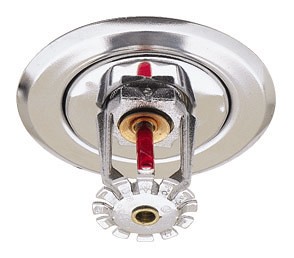 Of the many questions we get at ConstructionDeal.com, one of the most common is 'Why are sprinklers required in some areas and not in others?" What is the reason for all the various rules, regulations, and laws? We decided to check with the American Fire Sprinkler Association:
According to the AFSA, "Fire sprinkler systems are installed in accordance with consensus standards developed through the National Fire Protection Association (NFPA.)
These standards are very specific in defining how sprinklers are to be installed in different types of occupancies and different hazard classifications.
The three primary standards that define the installation requirements are NFPA-13 (Installation of Sprinkler Systems); NFPA-13R (Installation of Sprinkler Systems in Residential Occupancies Up to and Including Four Stories in Height); and NFPA-13D (Installation of Sprinkler Systems in One and Two-Family Dwellings and Manufactured Homes.)
The standards adopted by NFPA represent the best recommended practices, but the standards by themselves are not 'law.' Development of the consensus is a dynamic process and the standard is changed to reflect new technologies, science, and experience. Every three years a new version of the standard is issued that contains changes and updates.
The requirements for the installation of fire sprinklers are adopted as law by state or local jurisdictions as a part of their building code or local ordinance. At times jurisdictions may vary some of the requirements contained in the NFPA documents. Differences in requirements will vary from city to city based on local changes made to the NFPA standards, or the year of the standard adopted by the local jurisdiction.
For example, if one city adopts the 1999 NFPA 13 standard, and another city adopts the 2002 issue of the same standard, there will be differences."
If your city requires fire sprinklers in your commercial or residential building, you can use Construction Deal to help you find a quality sprinkler installation company. It's a free service for you. You'll be matched with several installation companies and their multiple bids means you'll have the best price to choose from.
RELATED POSTS:
Do All Sprinklers Come On At Once?
Water Mist Fire Suppression Systems
Sprinklers: Adding Value and Saving Money





